Regulatory Acceptance of 3Rs Testing Approaches in Support of Medicinal Product Development
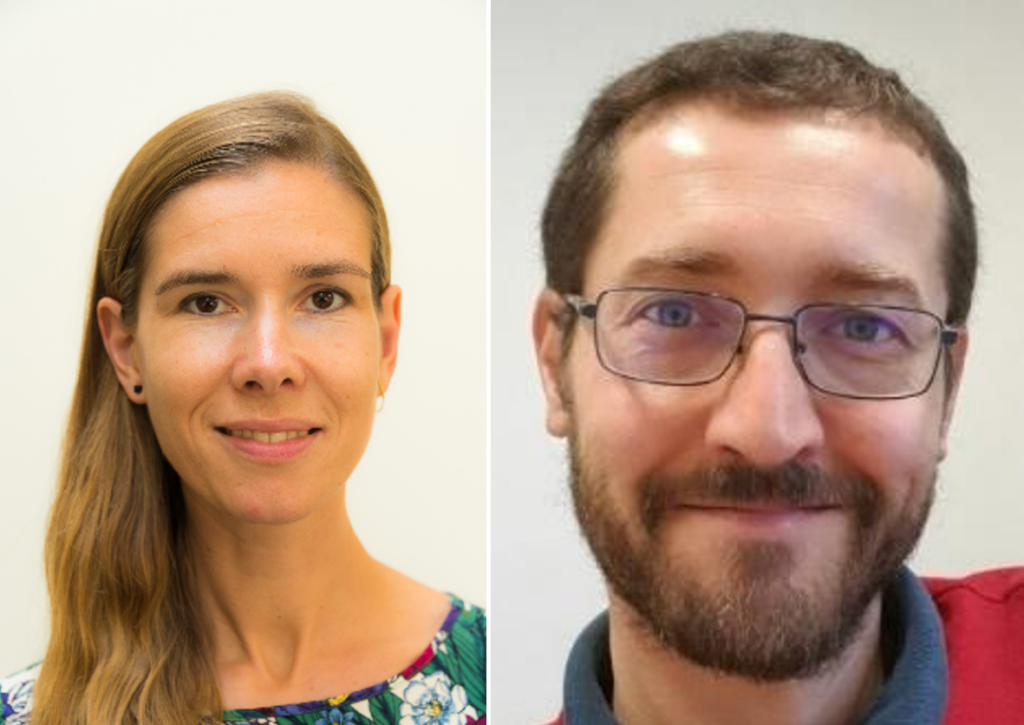
Sonja Beken holds a Master’s degree in Biological Sciences and a PhD in Pharmaceutical Sciences from the Vrije Universiteit Brussel (VUB), Belgium, as well as a Master’s degree in Applied Toxicology from the University of Surrey, UK. She is a European Registered Toxicologist. She serves as Coordinator of the Unit of Non-Clinical Evaluators at the Belgian Federal Agency for Medicines and Health Products, where she is responsible for overseeing the evaluation of non-clinical data submitted in support of all phases of drug development, including marketing authorizations, clinical trials, and EU and national scientific advice. In addition, she is Chair of the 3Rs Working Party at the European Medicines Agency, was the ICH Rapporteur for the revision of the S5(R2) Guideline, and is currently a member of the Implementation Working Group for ICH S7B/E14.
The NAM Navigator: Helping Researchers and Developers Gain Regulatory Approval for New Approach Methodologies
Martijn Nolte is the senior program manager for the “More Knowledge with Fewer Animals” program at ZonMw in The Netherlands, where he spearheads the shift toward animal-free research models. In this strategic role as a research funder, he advocates for the development and implementation of innovative animal-free methodologies, as well as responsible research in case animal experiments are required. Martijn’s career began with a PhD in Immunology from the Free University in Amsterdam in 2002, focusing on the physiology of the spleen. Following postdoctoral fellowships at the AMC in Amsterdam and Cancer Research UK in London, he established his own lab in 2006 at the AMC in Amsterdam. His research successfully bridged immunology and stem cell biology, leading him to Sanquin Blood Supply in 2011. There, he headed the Adaptive Immunity Lab and later became the Scientific Head of the Microscopy section. In 2021 he made a career move to ZonMw, the largest governmental funding agency of The Netherlands for (bio)medical and healthcare-related research. This journey from the intricacies of immune activation to an influential funding program is fueled by a singular passion: the belief that the future of science lies in our ability to innovate beyond traditional boundaries, replacing legacy methods with novel, human-relevant technologies that honor both scientific excellence and ethical progress.
Using fluorescence lifetime imaging microscopy (FLIM) to address the internalization of nanoplastics and their impact on metabolism in stem cell-derived organoid models
Ruslan I. Dmitriev has a long-standing research interest in live multi-parameter Fluorescence Lifetime Imaging Microscopy (FLIM) of 3D tissue models, which include spheroids, intestinal and ‘brain’ organoids. His team pioneered imaging oxygenation of neurospheres and metabolic imaging of the small intestinal organoids. He is an associate professor at Ghent University (Ghent, Belgium), head of Tissue Engineering and Biomaterials group and board member/ chair of Ghent Light Microscopy Core. His current research interests are in multiphoton FLIM, imaging-assisted organoid & tissue engineering, as well as visualisation of physiologically relevant (bio)molecular gradients in the living 3D tissue models of cancer and in tissue engineering.
Cultivating in vitro expertise: how RE-Place supports the use and development of cell culture systems in Belgium
Mieke Van Mulders is a Biomedical Scientist with a special interest in the use, development and regulatory acceptance of New Approach Methodologies (NAMs). Since 2017, Mieke has played a key role in the RE-Place project, a collaboration between Sciensano and the Vrije Universiteit Brussel (VUB). She was responsible for the development and optimisation of the RE-Place platform, which promotes knowledge sharing on alternative methods to animal testing within the Belgian life sciences community. Mieke is actively involved in activities that support the regulatory acceptance of NAMs such as the Belgian PARERE network. She also serves on the Management Board of the Belgian Society of Toxicology and Ecotoxicology (BelTox), where she leads the communication activities, and is a member of the Flemish and Brussels animal testing committees.
From Early Development to Early Adoption: Shaping the Dutch Ecosystem for Dynamic Human Models
Jetty van Ginkel is an innovation strategist with broad experience in guiding research and technological development towards practical application in healthcare. Drawing on her background in biomedical engineering and biophysics, she has been active across the innovation chain, supporting researchers and start‑ups, coordinating multi‑partner initiatives, and building public‑private partnerships that bring together academic institutions, companies, healthcare providers, patient organizations and governmental stakeholders.Her work focuses on creating conditions in which complex innovations can progress, from early scientific discovery to implementation, by aligning interests, building coherent strategies and fostering effective cooperation across sectors. As Managing Director of hDMT (since August 2025), she contributes to the national effort to advance and implement dynamic human models, such as Organ‑on‑Chip technologies, in the Netherlands. Jetty aims to help teams develop technologies that deliver tangible and lasting value for society.
Architecture-preserving tumor and tissue fragments as a scalable 3D platform for drug evaluation
Olivier De Wever is a Full Professor at the Laboratory of Experimental Cancer Research at Ghent University, Belgium. His research team specializes in modelling cancer using in vitro, ex vivo, and in vivo systems. The group has conducted seminal work on defining minimal information guidelines and developing step-by-step protocols for working with three-dimensional (3D) cellular structures. Elements of the tumor microenvironment—such as fibroblasts—are active drivers of tumor progression and treatment response and form an integral part of the team’s model systems. Professor De Wever has a collaborative mindset that has led to extensive translational research with clinicians, essential for establishing patient-derived and patient-relevant models. As head of the Clinical Tissue and Cell culture core facility he is ideally positioned to lead the establishment of ex vivo tumor models.
Patient-derived organoids-based platform for predicting toxicity in humans
Yotam Bar-Ephraim completed a PhD in immunology at the Amsterdam UMC after which he joined the lab of Hans Clevers at the Hubrecht Institute as a postdoc, where he investigated the use of patient-derived organoids as a model for developing immune therapies to cancer. After leaving academia, Yotam joined LUMICKS, an Amsterdam based research tools company, as a field application scientist after which he became a product manager at the same company. In June 2025, Yotam joined HUB Organoids (part of Merck KGaA) as product development manager, with the aim to direct the HUBs offering to best serve customers’ requirements.
Should 3D cultures for safety studies necessarily consist of human cells?
Bert Devriendt holds a PhD in Veterinary Sciences from Ghent University, where he is currently associate professor of immunology at the Faculty of Veterinary Medicine. With more than 20 years of experience in immunology and bacterial enteric diseases, his research focuses on unravelling host–pathogen interactions at the mucosal surfaces in pigs. To this end, his group applies advanced 3D models, including intestinal organoids, and uses the insights obtained with these models to inform the development of oral vaccine strategies.
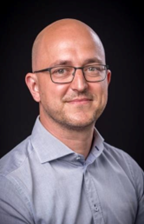
Regulatory in vivo studies: current landscape and emerging perspectives
Eric Fichant is working as Scientific Director in the Preclinical Research and Pharming business unit of the CER group, a non-profit organization embedded in the international biotech ecosystem. In this role, he is responsible for the scientific strategy, development, and oversight of preclinical research activities, bridging experimental biology with translational and regulatory expectations.
His work focuses on advanced preclinical models and the promotion of more predictive research approaches aligned with the 3Rs principles (Replacement, Reduction, Refinement).
Through his leadership position, Eric contributes to positioning CER Groupe as a key partner for biotechnology companies, pharmaceutical industry, and academic institutions, supporting research programs from exploratory stages to decision-enabling preclinical packages.
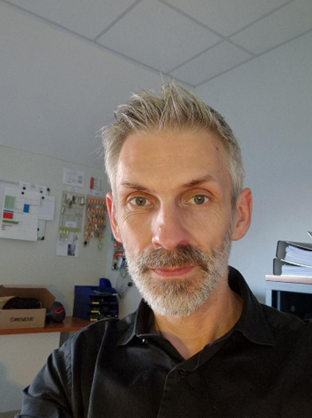
Supporting regulatory processes and efficiency with biomanufacturing data : for 3D cultures too?
Thibault Helleputte is a computing sciences engineer with a PhD from UCLouvain in Belgium. He also holds a Master’s degree in management from the Louvain School of Management.
Over the years, his work has been recognized by, among others, IBM, the Belgian National Fund for Scientific Research (FNRS), Microsoft, and MIT.
He is the co-founder and CEO of DNAlytics, a company supporting the healthcare industry with expertise and solutions based on data sciences. Thibault and DNAlytics currently contribute to the research and development of new healthcare products, the interoperability and reuse of data from routine medical practice, and the digitalization of bioprocesses.
Since 2024, Thibault has also been a member of the data and artificial intelligence ethics committee for the Belgian federal administration.
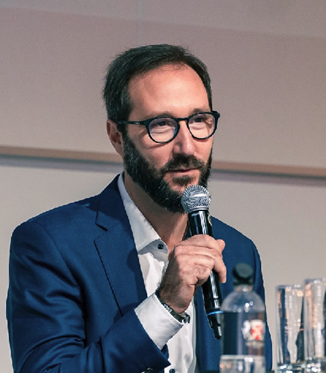
Closing the Gap: Advanced 3D Cell Models and Live-Cell Analysis for Preclinical Toxicity Profiling
Queeny Dasgupta is an accomplished scientist with over 10 years of experience in advanced cell-based systems, including organoids and organ-on-chip platforms for drug screening and preclinical disease modeling. As Principal Scientist at Sartorius, she leads development of advanced cell models and novel in vitro technologies. Previously at Systemic Bio, she led collaborative research on 3D vascularized models for drug toxicity and disease modeling.
Her postdoctoral work at the Wyss Institute at Harvard reported the first lung-on-chip model to study radiation-induced lung toxicity. She holds a PhD in Bioengineering and has a strong track record in publishing and driving translational research on advanced cell models for vascular injury, cardiac, brain, and lung toxicity.
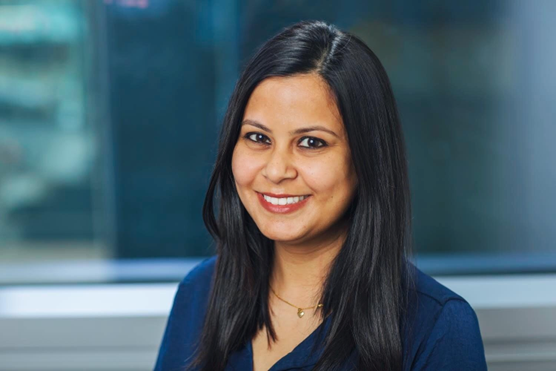
Human organoid and organ-on-chip models to unravel disease mechanisms and innovative therapies for chronic lung diseases
Marianne Carlon graduated as a doctor in veterinary medicine at the University of Ghent in 2007, with a specialization in research and industry. In 2012, she obtained a PhD in Biomedical Sciences at KU Leuven on the development of an adeno-associated viral vector gene therapy for cystic fibrosis. She started her post-doctoral in 2012 as a visiting scientist at Institut Necker Enfants Malades/INSERM U1151 in Paris to further specialise in cystic fibrosis molecular cell biology.
From 2013 onwards, she established a dedicated cystic fibrosis research team at KU Leuven in the Faculty of Medicine. Her team specialises in understanding the underlying gene defect in cystic fibrosis and the development of causative CRISPR strategies targeting the basic defect, making use of primary cell models including organoids. She is board member of the Leuven Viral Vector Core, that develops customized gene therapy solutions for basic and translational research.
In 2021, she got appointed a BOFZAP professorship in the Breathe Laboratory at the KU Leuven She focuses on the development of innovative cell models, including organ-on-chip systems, for studying the underlying disease mechanisms of chronic lung diseases, including pulmonary fibrosis.
Right after obtaining a BS in Chemical Engineering, Xavier Casadevall i Solvas held positions in industry (Food and Pharmaceutical) before moving to the US to undertake graduate studies at UC Irvine. In 2009, he obtained a combined MS/PhD in Chemical and Biochemical Engineering for his work on Bio-MEMS. He then moved to Imperial College London as a postdoc, where he contributed to develop (droplet-based) microfluidic technologies for high throughput screening. In 2012, Xevi moved to the ETH Zürich as a Senior Scientist, where he applied microfluidic technology for biological experimentation in single cells and C. elegans nematodes. In 2018 he joined Novartis for a 1-year project, contributing to establish their European Cell & Gene manufacturing facility for the production of Kymriah (CAR T cell). Since 2019 he leads the Biomimetics group in the Biosystems department at KU Leuven, where he works on replicating biological processes at the micro- and nano-scale for applications in human health, including artificial therapeutic cells and organ-on-chip systems.